
Honoring the Assignment
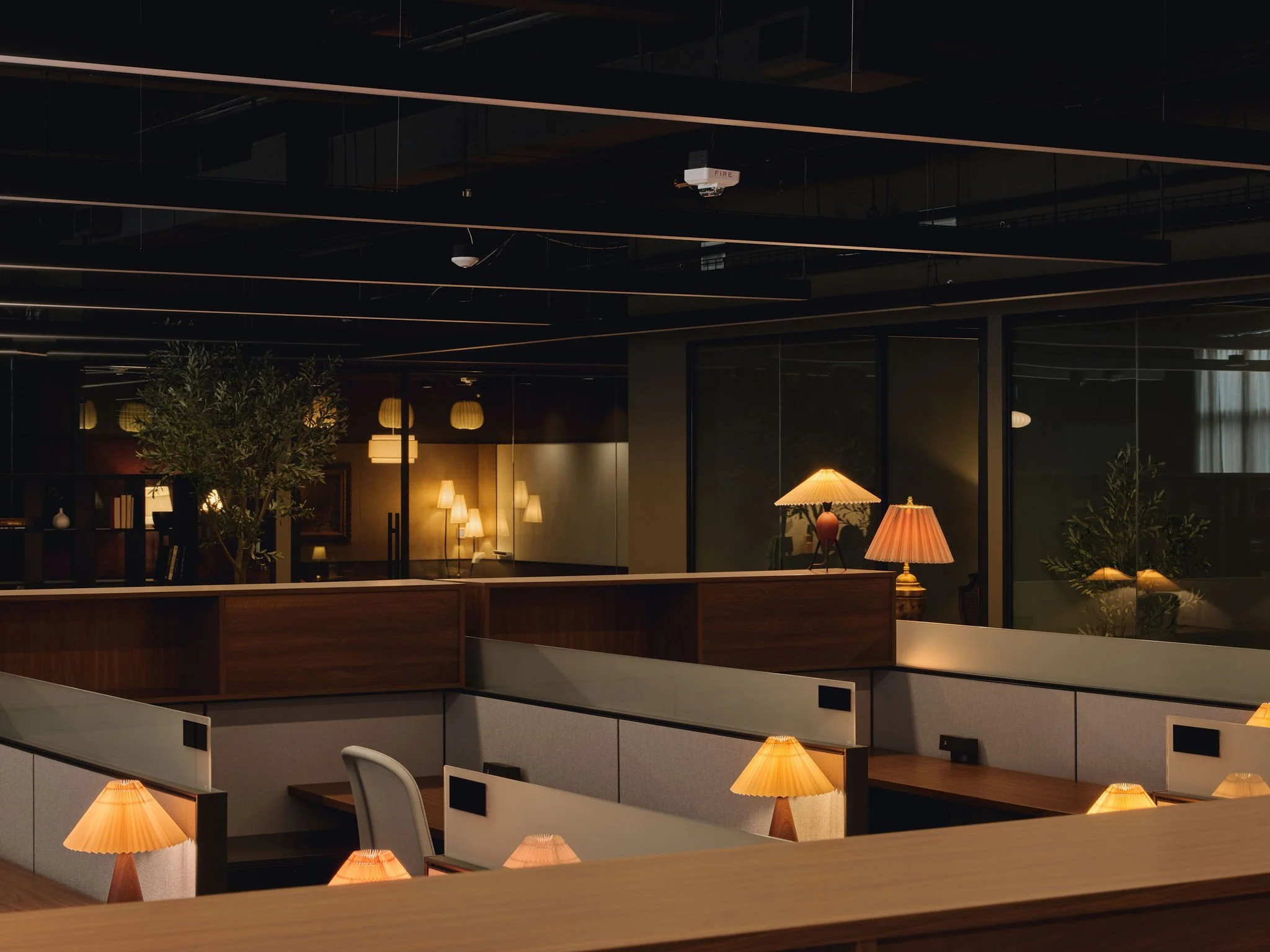
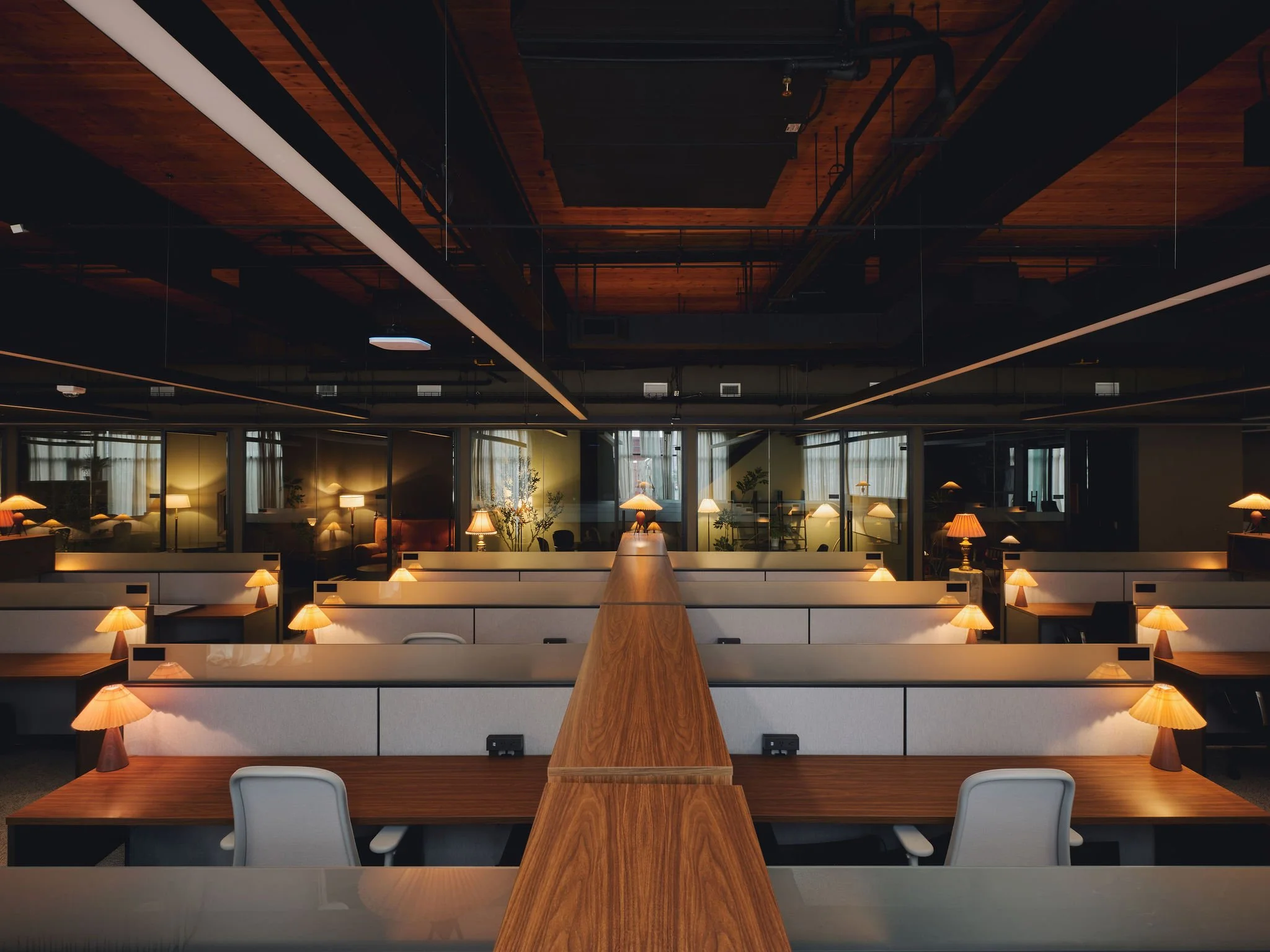
Walk into almost any high-growth tech startup today and you are met with the exact same industrial playbook: cold acoustic ceiling tiles, rows of identical white laminate benches and blistering rows of fluorescent tubes buzzing overhead. It looks less like a place built for people and more like an observation pen. When we were approached the design of the corporate headquarters for Subject in East Austin, we flatly refused to follow this playbook.
Subject isn’t another Silicon Valley vanity project chasing unicorn status… In a country where over half of American adults read below a sixth-grade level and educational achievement gaps continue to widen, high-impact tutoring and individualized instruction have historically remained an elite luxury. Subject flipped that premise on its head, building an AI-powered platform to deliver high-caliber, scalable learning to the other ninety-nine percent.
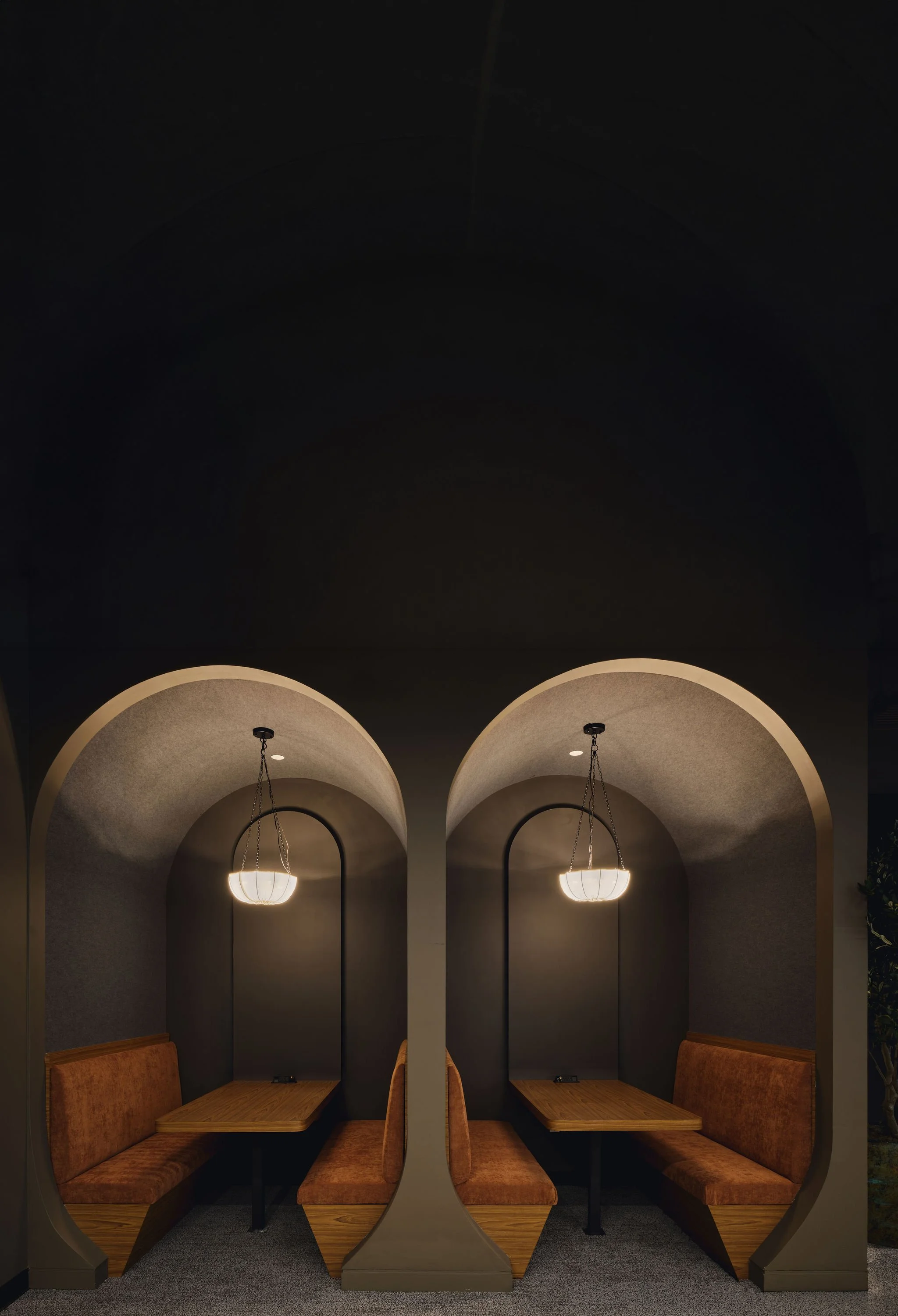
We knew a mission of this magnitude cannot be housed in a disposable flat-packed white drywall box. It demanded deign that honors the weight of the assignment. So we set out to build not just an edtech office, but a space that feels like a members’ club, carries the soul of a boutique hotel lobby, and holds the quiet authority of an academic institutions of old.
Choosing Dignity Over Efficiency
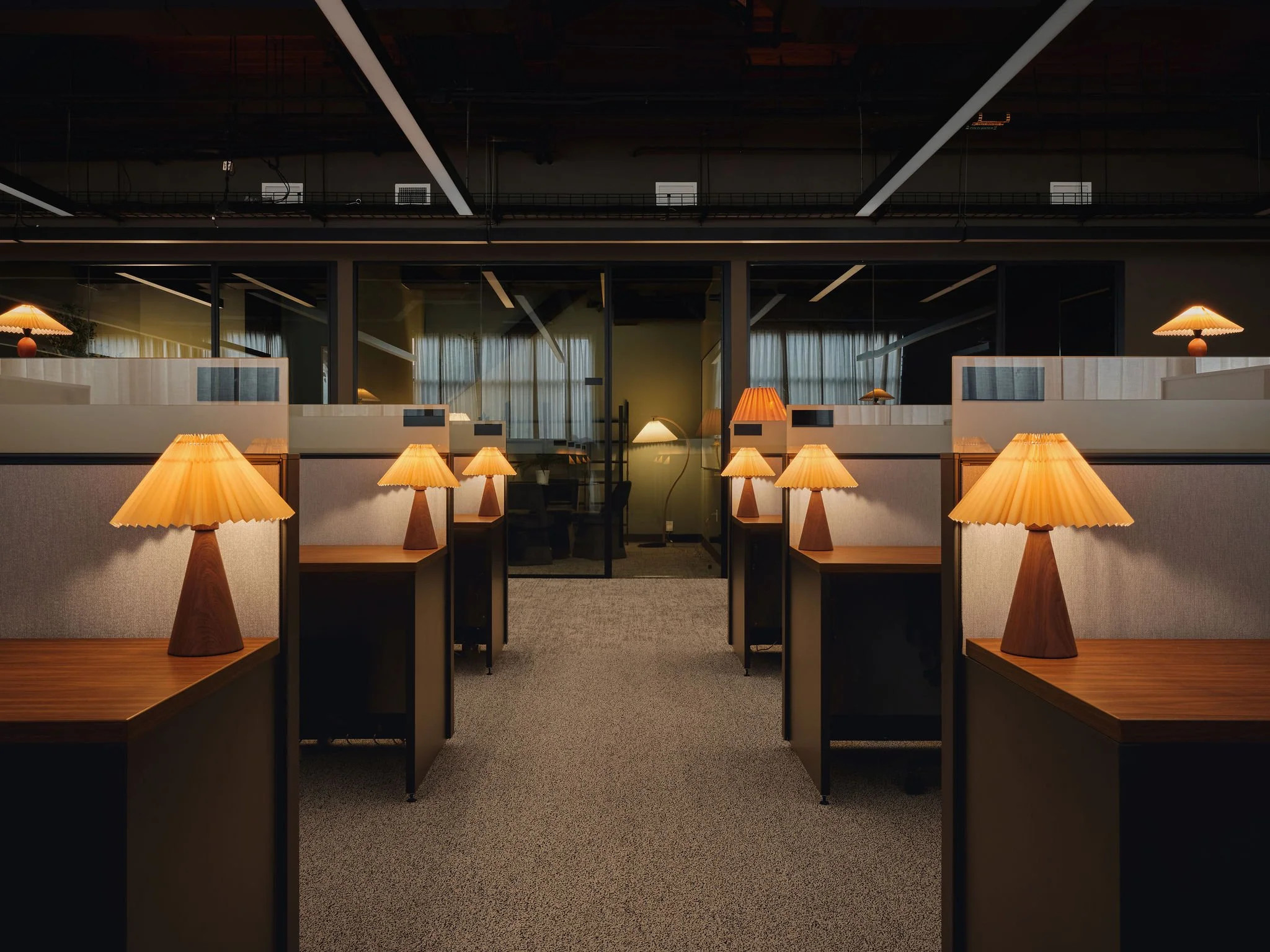
Charles Vesley | Head of Design: The creative tension here was immediate. The startup world is obsessed with efficiency metrics… these sterile corporate studies preach that you need 5000K daylight-spectrum fluorescents bearing down on desks to maximize employee output and keep people sharp. But when you treat your team like lab rats you remove the dignity right out of the room. Our posture was simple… what makes a space somewhere you actually want to be at 6:00 PM on a cold dark Thursday night in late January? You don’t get there by blasting people in flat overhead glare. We took a sledgehammer to the ceiling grid and waged war on the overhead lighting.
Tim Stanton | Head of Brand: It’s interesting because light is the very first thing your nervous system registers and the absolute last thing an office ever thinks through. If you light an office strictly from the ceiling, people feel processed, monitored, and exhausted by 2:00 PM and need another cup of coffee.

“The traditional office is sterile, disposable and engineered to process people like lab rats under observation.”
- Charles Vesley | Head of Design
Designing for Human Connection
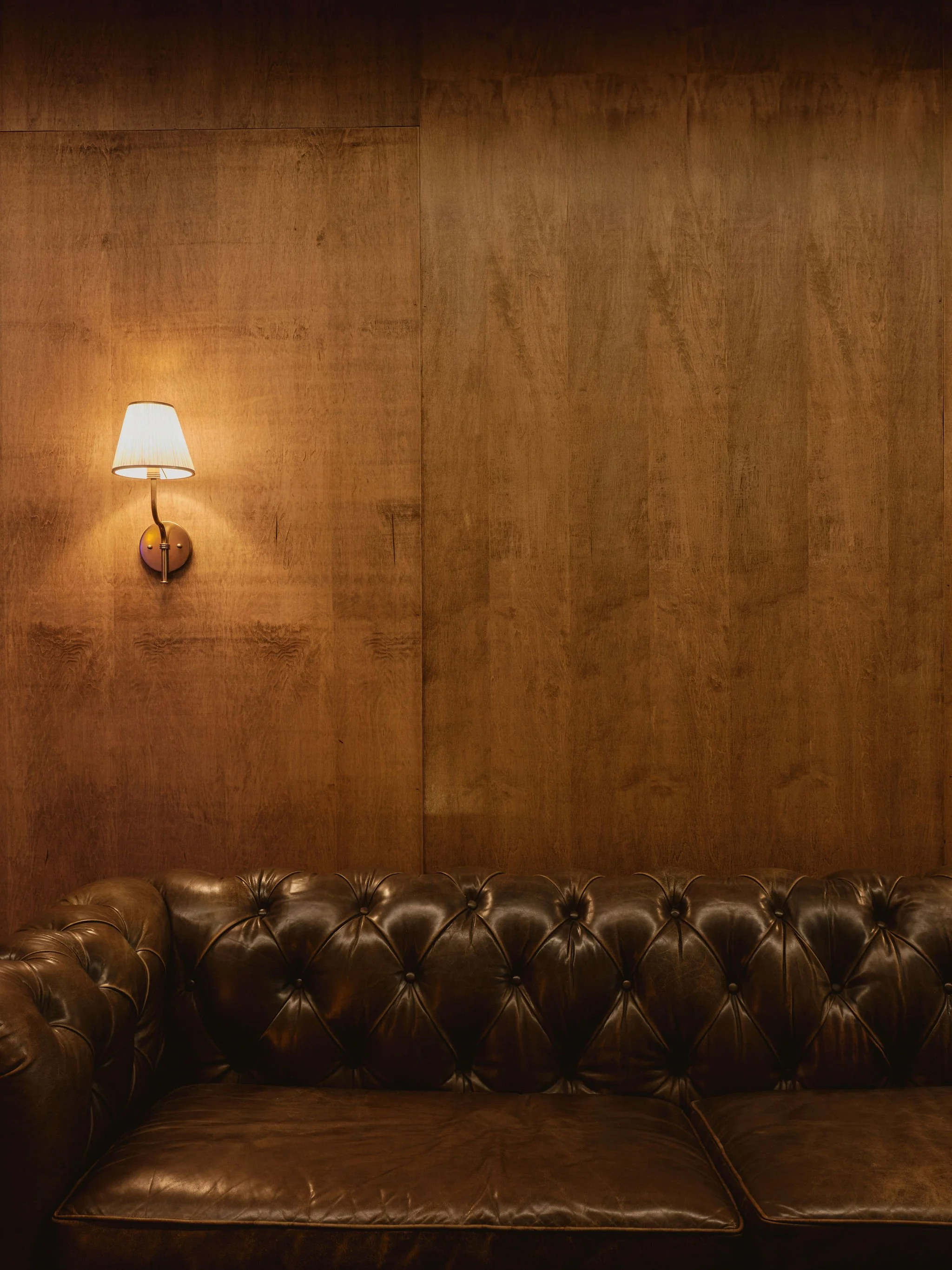
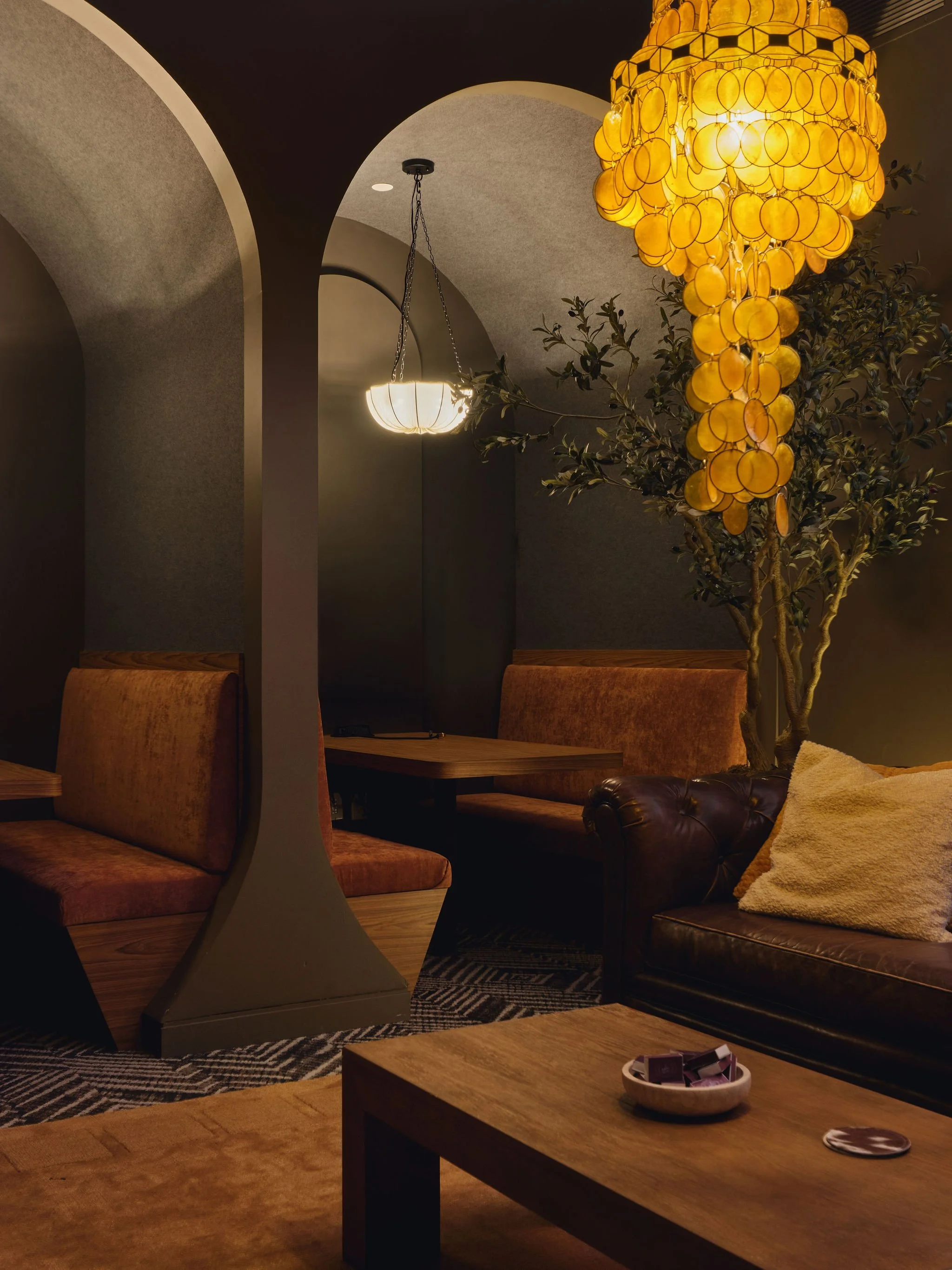
CV: We replaced the institutional glare with soft, warm, layered lighting… antique brass table lamps, heavy floor lamps, articulating wall sconces and pendants dropped tight to the work surfaces. When an environment is held by three or four different light sources the psychology changes.
TS: It ceases to be an office you survive… stops feeling like a cube you have to endure… and starts feeling like a living room you actually want to hang out in. It sets a different tone for everyone… it softens the edges, opens people up and makes it natural to build genuine relationships with your team.
The Minister of Culture
CV: When the Subject team sat down with us, they noted that their Los Angeles headquarters is unmistakably LA. Austin couldn’t just be a satellite copy-paste. But instead of leaning into lazy local clichés we anchored the regional identity entirely in raw materiality and historical patina.
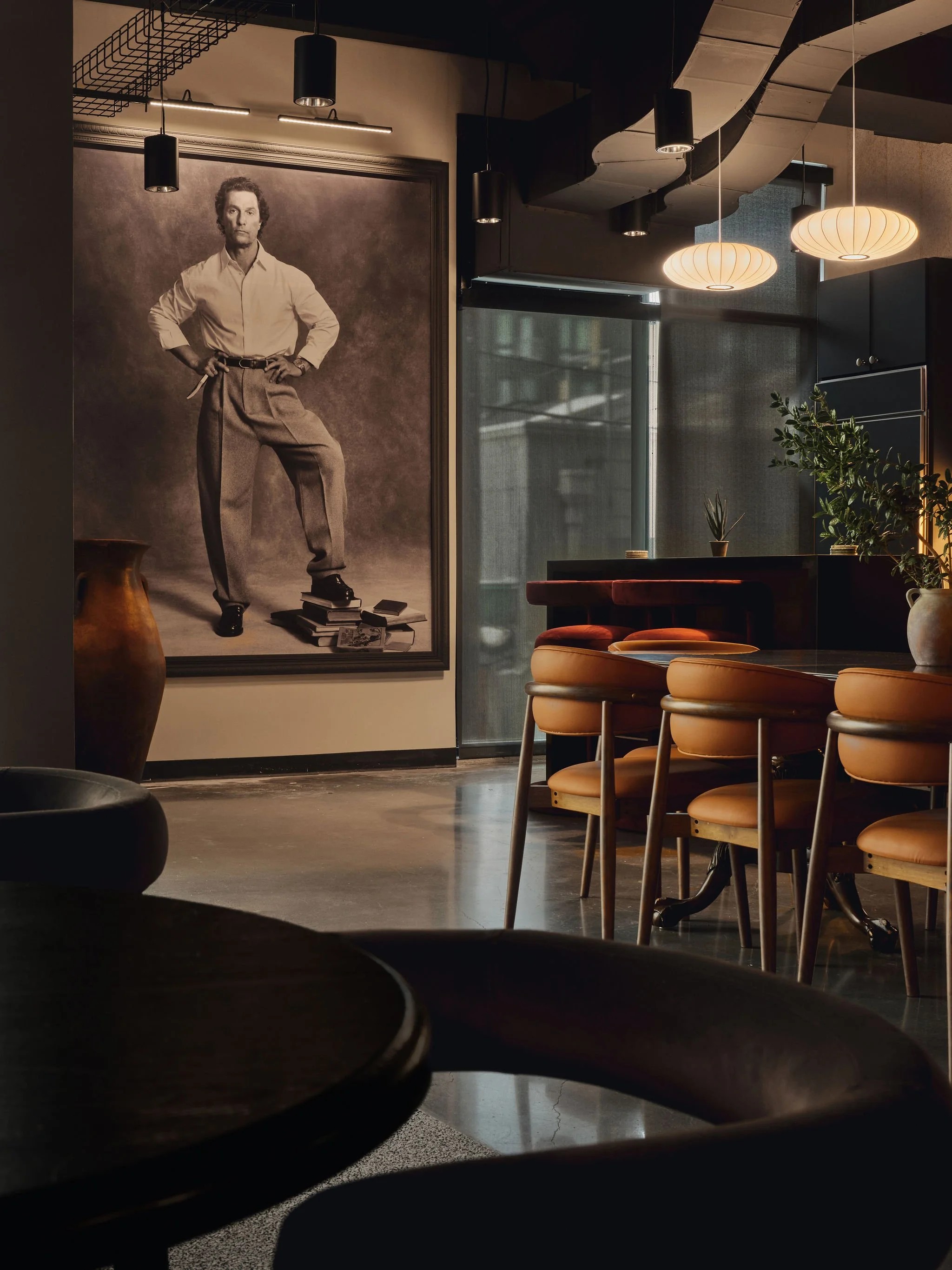
TS: If you’re going to build in Austin, you have to acknowledge the patron saint of the city. We commissioned a massive, ten-foot-tall photograph of Matthew McConaughey and mounted it dead-center in the space. It’s not some Hollywood red-carpet shot. He’s dressed like an eccentric, tenure-track professor—tweed, rumpled poise, looking dead into the camera with one boot propped up casually on a thick stack of vintage hardcovers. It’s commanding, slightly rebellious, and completely magnetic. You catch his eye across the room, and there’s an unmistakable swagger to it. It quietly signals: we take the mission seriously, but we don't take ourselves too seriously. We’re here to win.

The Altar of the Second Life
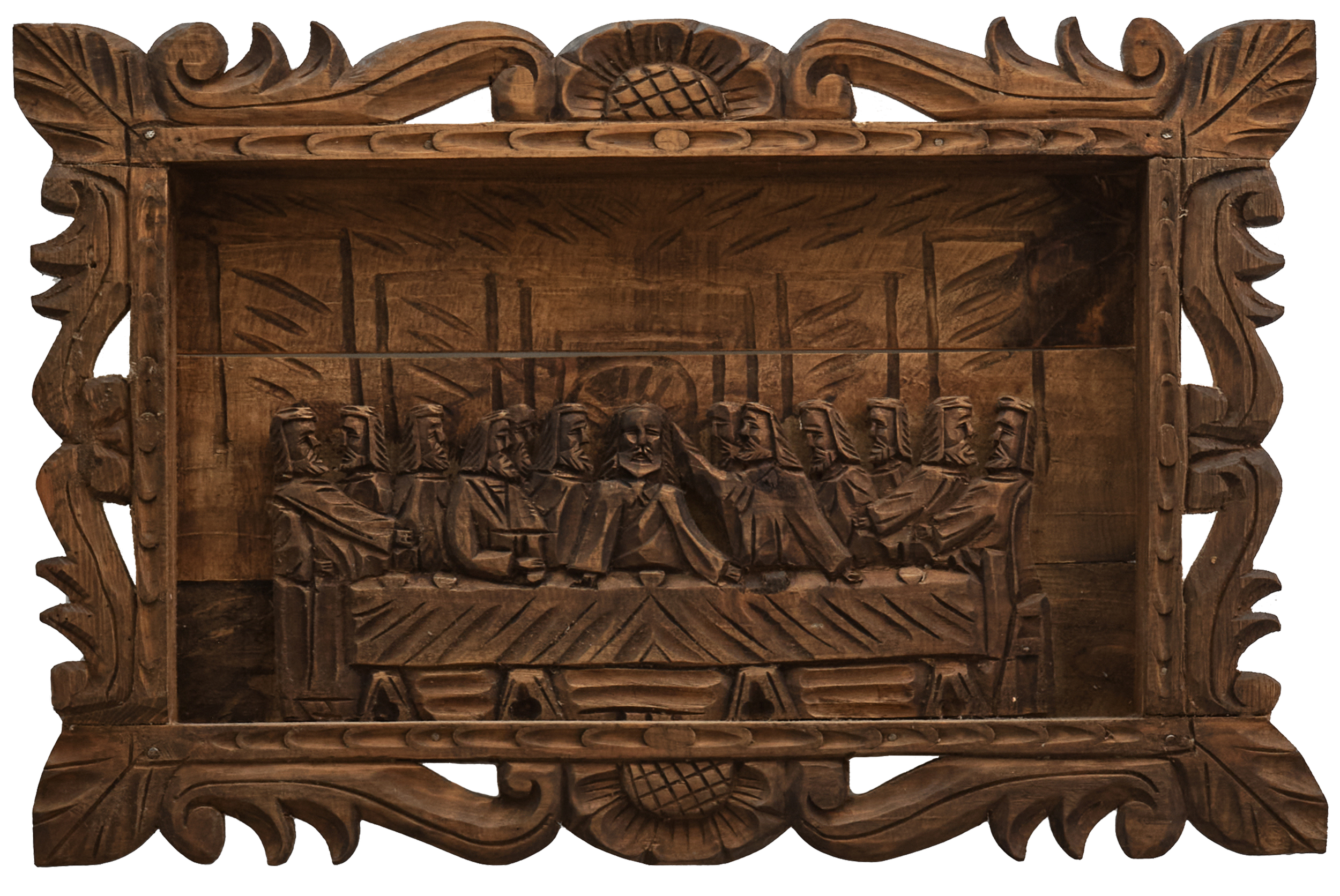
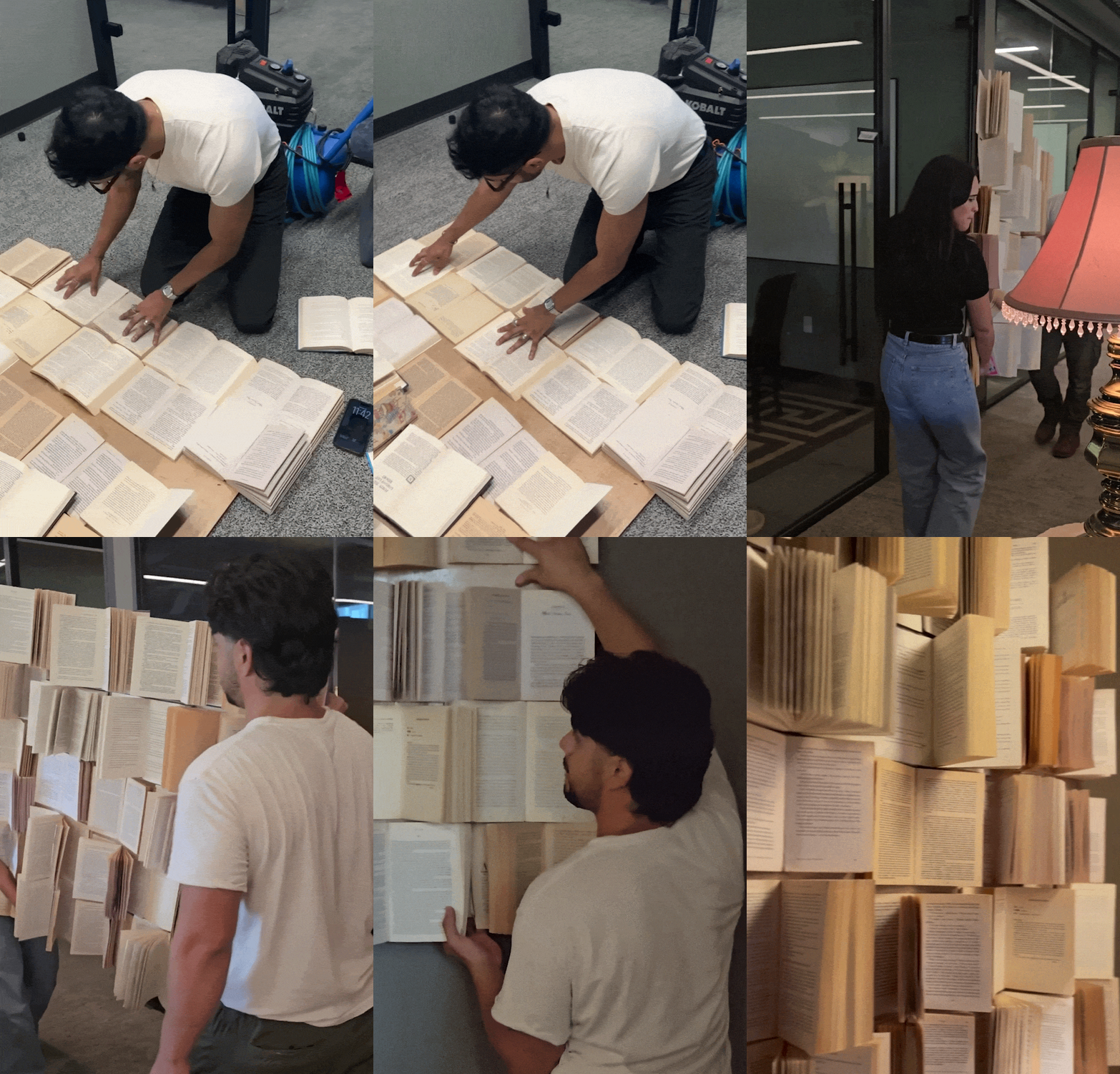
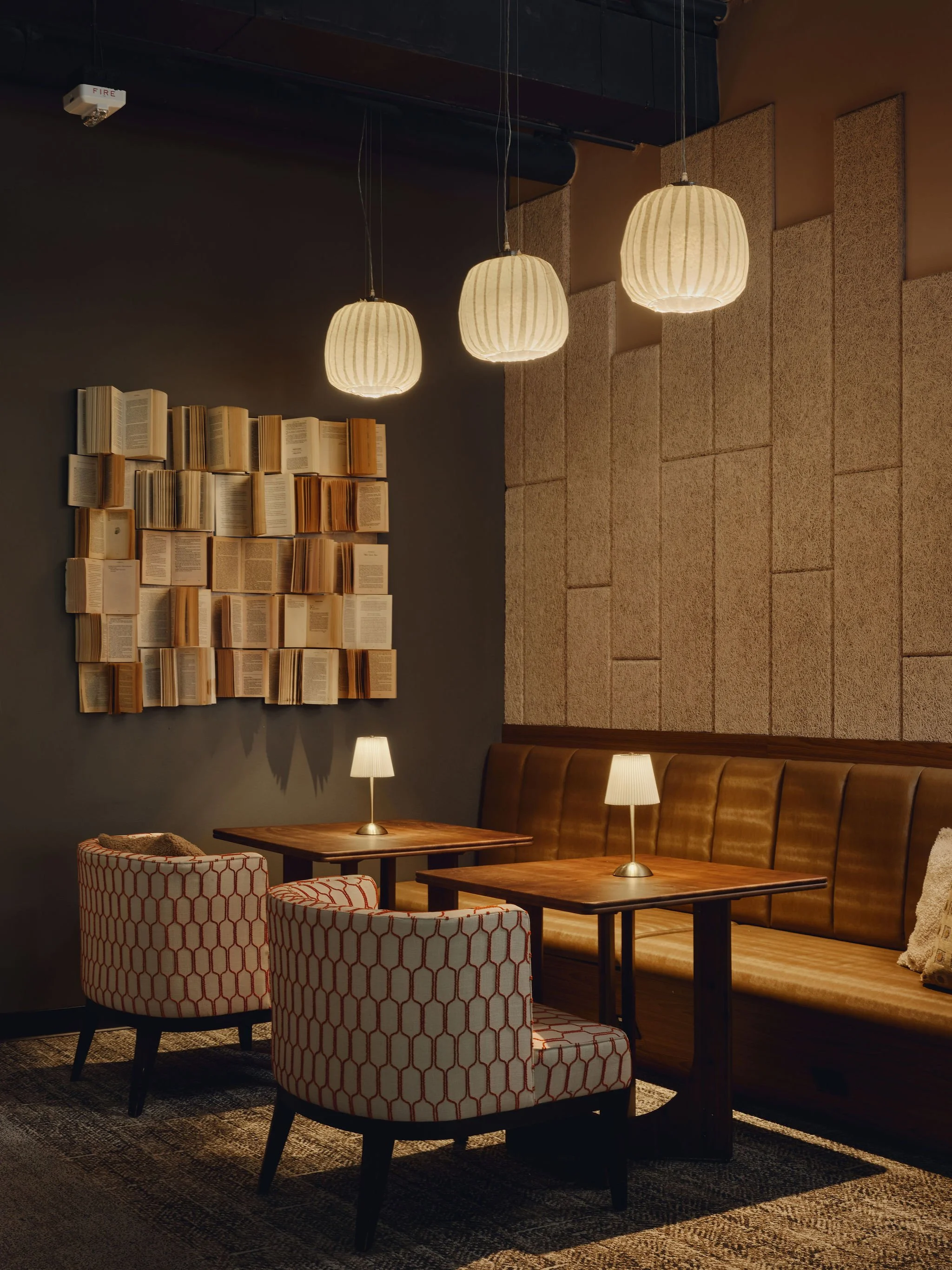
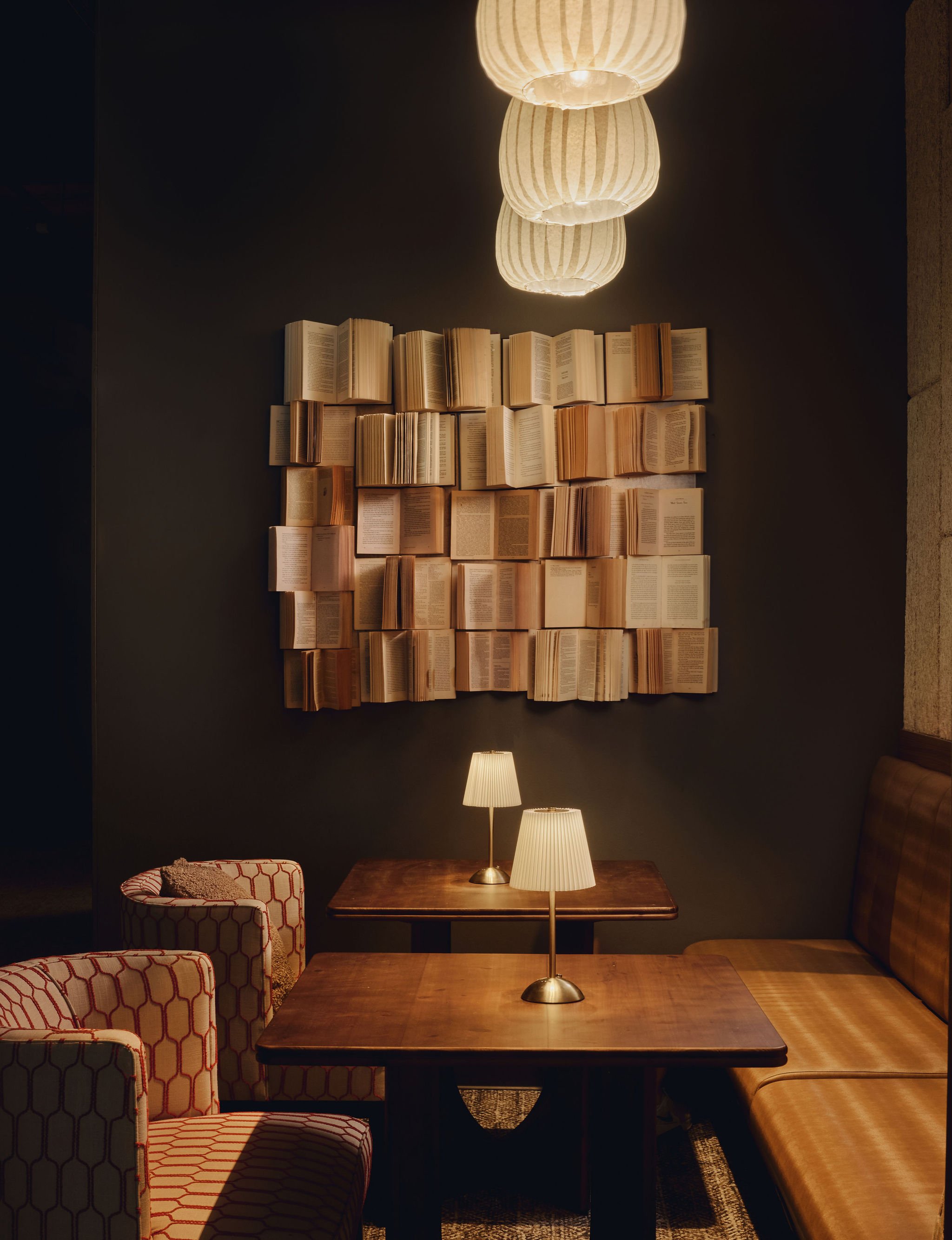
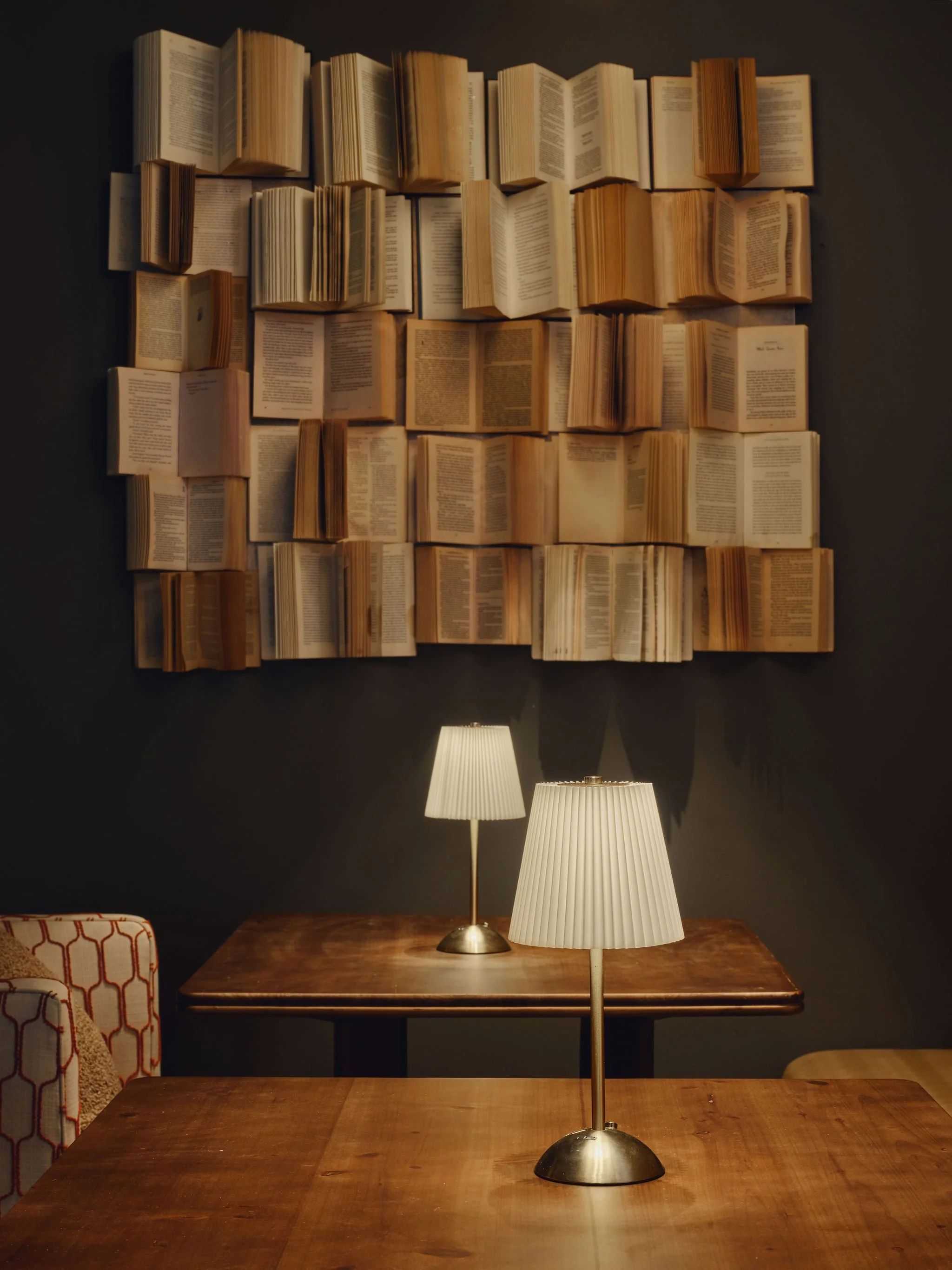
TS : You look at that installation on the front wall and under the pendant lights, those aged pages don’t just reflect light, they hold it. It’s this deep, golden patina that you literally cannot manufacture. You can’t fake fifty years of oxidation, dust, and handling. In a world that discards anything slightly worn, our entire thesis at Reclamation is built on the radical opposite… that the most sacred, soulful things in a room are the ones that have already lived a life. We didn’t order framed art prints from a catalog. We saw something forgotten and asked, what if this gets to speak again?
CV: The story of how we actually got them still makes me smile. I was digging through the bins at the Goodwill with my one-year-old son strapped to my chest. He was reaching out, grabbing spines, making noise, totally captivated by the sheer volume of paper. I rolled up to the checkout with this massive, teetering stack of hardcover novels, encyclopedias, forgotten anthologies that were bound for the recycling pulper. The woman at the register looked down at my boy smiling up at her, looked at the pile, and said, “Just give me a dollar each for the lot.” Twenty bucks in cash, and we walked out with an entire library’s worth of literal history.
“AI can either become another luxury moat for the top tier of society, or it can be forged into a hammer that levels the field for everyone else.”
- Tim Stanton | Head of Brand
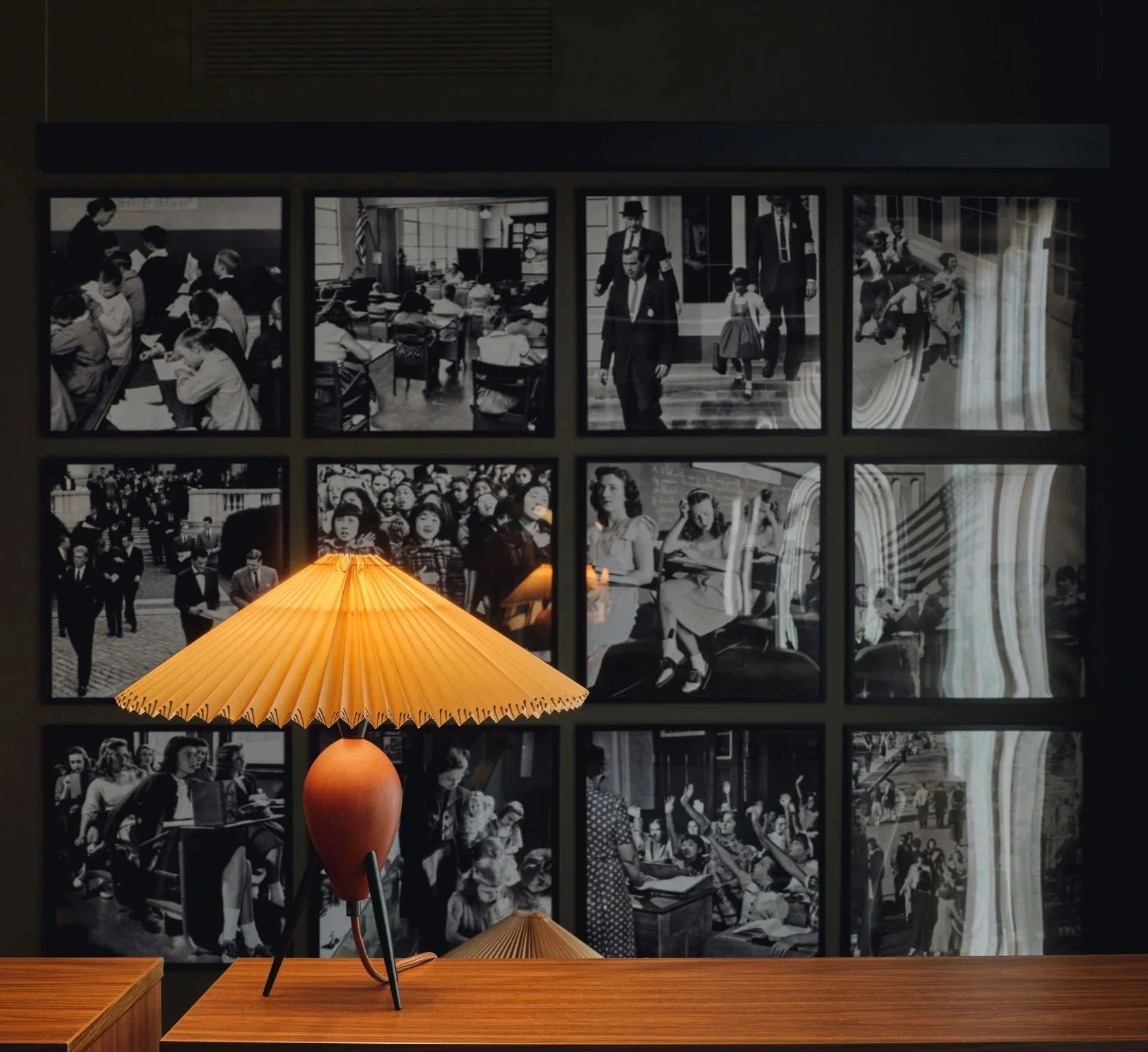
CV: But the heartbeat of the space… the thing that stops you in your tracks… is the gallery wall of archival black-and-white photographs of school children. We sourced portraits from classrooms spanning the early-to-mid 20th century… kids with ink-stained fingers, sitting two to a wooden bench, wide-eyed farm kids huddled over chalk slates, girls in pinafores with heads buried in literature. When you look into those faces, all the tech jargon, the venture metrics, and the pitch decks dissolve.
TS: It ties straight back to the stewardship of what Subject is doing. Literacy and reading comprehension are cratering and the kids who suffer the most are always the kids without trust funds. AI can either become another luxury moat for the top tier of society, or it can be forged into a hammer that levels the field for everyone else. It’s a silent, daily charge to the employees to remember who you work for. A reminder they aren’t here to build a toy for the one percent… they’re here to unlock the minds of the ninety-nine.